Monday, August 30, 2010

mungaru male song remake,

ಈ ಹಾಡಿನ ರಿಮೇಕ್ ಮಾಡಿದವರು ಯಾರೋ ಗೊತ್ತಿಲ್ಲ. ಅನಾಮಿಕರು ಬರೆದ ಆವೃತ್ತಿ
ಇಮೇಲಿನಲ್ಲಿ ಬಿಡುಗಡೆ ಆಗಿದೆ. ಅದನ್ನು ಲೋಕಾರ್ಪಣೆ ಮಾಡುವುದಷ್ಟೇ ನಮ್ಮ ಕೆಲಸ.
ಲೇಖಕರ ಹೆಸರು, ಊರು, ಕುಲಗೋತ್ರ ಇಲ್ಲದೆ ಬಂದ ಈ ಹಾಡನ್ನು ಯಥಾವತ್ತಾಗಿ ಇಲ್ಲಿ
ದಾಖಲಿಸುತ್ತಿದ್ದೇವೆ.


ಮುಂಗಾರು ಮಳೆಯೇ ಏನು ನಿನ್ನ ಹನಿಗಳ ಲೀಲೆ
ನಿನ್ನ ಮುಗಿಲ ಸಾಲೇ, ಮನೆಯ ಗೋಡೆ ಉರುಳಿದ ಮೇಲೆ
ಸುರಿವ ರಭಸದ ಜಡಿ ಮಳೆಗೆ ನೀರು ತುಂಬಿದೆ
ಯಾವ ಹೊತ್ತಿನಲ್ಲಿ ಯಾವ ರೂಮು ಕೆರೆಯಾಗುವುದೋ
ಯಾವ ಪೈಪು ಕುಡಿಯೊಡೆಯುವುದೋ ತಿಳಿಯದಾಗಿದೆ
ಮುಂಗಾರು ಮಳೆಯೇ ಏನು ನಿನ್ನ ಹನಿಗಳ ಲೀಲೆ

ಭುವಿ ಕೆನ್ನೆ ತುಂಬಾ ಮಳೆಯು ಸುರಿದ ಮುತ್ತಿನ ಗುರುತು
ನಮ್ಮ ರಸ್ತೆ ತುಂಬಾ ಹೊಳೆವ ಕೆಂಪು ಕೆಸರಿನ ಗುರುತು
ಹೆಜ್ಜೆ ಇಟ್ಟರೆ ಜಾರುವ ಸದ್ದು ಕಾಲು ಗಾಯವೋ
ಮನೆಯ ಮುಂದಿನಿಂದ ನೀರು ಚೆಲ್ಲಿ ನಿಂತೆ ನಾನು
ಉಕ್ಕಿ ಉಕ್ಕಿ ಬರುವ ಜಲವು ಏನು ಕೋಡಿಯೋ

ಯಾವ ಕಾರಿನಿಂದ ಯಾರ ಮೇಲೆ ನೀರೆರಗುವುದೋ
ಯಾವ ಹನಿಗಳಿಂದ ಯಾವ ನೆಲವು ಕೆಸರಾಗುವುದೋ
ಯಾವ ಕೆಸರಲ್ಯಾರ ಹೆಸರೋ ಯಾರು ಬರೆದರೋ
ಯಾವ ಕಪ್ಪು ಬಣ್ಣದ ಕೊಡೆಯು ಯಾರ ಕೈಯಿನಲ್ಲರಳುವುದೋ
ಯಾರ ತಲೆಯ ಮೇಲೇರುವುದೋ ಯಾರು ಬಲ್ಲರು

ಒಲವ ಮಳೆಯ ಮಾಮ ನಗುತ್ತಾ ಬಂದ ಮನೆಯಂಗಳಕೆ
ಮಬ್ಬು ಬೆಳಕಿನಲ್ಲಿ ಒಂದು ಕಾಲು ಗುಂಡಿಯ ಒಳಗೆ
ಒಗೆದ ಬಟ್ಟೆಯಲ್ಲಾ ರಾಡಿ ಏನು ಮೋಡಿಯೋ
ದೊಡ್ಡ ಮೋರಿಯಲ್ಲಿ ಕಳೆದು ಹೋಗೋ ದುಃಖವ ನೆನೆದು
ಇನ್ನೂ ಇಲ್ಲೇ ನಿಂತಿದೆ ನೀರು ಏನು ಮಾಡಲಿ


Friday, August 27, 2010

Pak flood affected Christians, other minorities facing aid discrimination


2010-08-27 16:30:00


Christians and other minorities affected by the devastating floods in Pakistan are allegedly facing "systematic discrimination" in the distribution of aid.
"Christian refugees are often ignored. They are purposely not identified and registered. Thus, they are automatically excluded from any healthcare or food, as they supposedly do not exist," the Daily Times quoted a local NGO worker, as saying.
Earlier, the Fides news agency, a branch of the Vatican's Congregation for the Evangelisation of Peoples, claimed that aid was handled either by Muslim relief organisations or by government officials close to fundamentalists. Both were allegedly discriminating against Christians and other minorities in distributing aid essential for survival.
About 200,000 Christian refugees in Punjab and about 600,000 Christians and Hindus in Sindh are reportedly affected by the phenomenon. (ANI)
All About: Islamabad 

Wednesday, August 11, 2010

Golden Jubilee Valedictory ceremony, August 13, 2010

Welcome to the Golden Jubilee Valedictory Ceremony  on Aug 13 , 10.30 AM . at S J A .

The Chairman and Members of the Board of Governors,
Director,
Faculty, Staff , Students and Alumni
cordially invite you to 
the Golden Jubilee Valedictory Ceremony
on August 13, 2010 at 10.30 AM
in the Silver Jubilee Auditorium of the Institute
Sri B S Yeddyurappa 
Hon'ble Chief Minister of Karnataka
has kindly consented to be the Chief Guest
Dr V S Acharya
Hon'ble Home Minister of Karnataka
has kindly consented to be the Guest of Honour
Sri Murugesh R Nirani
Hon'ble Minister of Large and Medium Industries, Govt. of Karnataka
and
Sri Krishna J Palemar
Hon'ble Minister of Ports and Inland Water Transport, Govt. of Karnataka
will grace the occasion as Distinguished Guests
Prof Goverdhan Mehta
Chairman, Board of Governors, NITK, will preside.


Thursday, July 29, 2010

Wallpaper Font of new RUPEES


These wallpapers are designed by Team Brand Mango at www.brandmango.com and copyright of Foradian Technologies Pvt Ltd - www.foradian.com
The Rupee symbol and its copyright belongs to Government of India.

You are free to- Share - copy, distribute and transmit the work - Remix - Adapt the work Under the following conditions - You must give credits and specify the link to the BrandMango and Foradian website.
- You may not use this work for commercial purposes.:)

Tuesday, June 29, 2010

Tug of war

Tug of war, also known as tug o' war, tug war, rope war or rope pulling, is a sport that directly pits two teams against each other in a test of strength
Posted by Picasa

Wednesday, April 21, 2010

AIR_SU-30MKI_Eurofighter_Tornado-F3_lg

 Sukhoi Su-30 MKI[3] (NATO reporting name: Flanker-H) is a variant of the Sukhoi Su-30 jointly-developed by Russia's Sukhoi Corporation and India's Hindustan Aeronautics Limited (HAL) for the Indian Air Force (IAF). It is an air superiority fighter which can also act as a multirole, strike fighter jet.
The development of the variant started after India signed a deal with Russia in 2000 to manufacture 140 Su-30 fighter jets.[4] The first Russian-made Su-30MKI variant was integrated into the IAF in 2002,[5] while the first indigenous Su-30MKI (with Russian engine) entered service with the IAF in 2004.[6] In 2007, the IAF ordered 40 additional MKIs.[7] As of March 2010, the IAF has 130 MKIs under active service and planned to have an operational fleet of 280 MKIs by 2015.[1]

The Eurofighter Typhoon is a twin-engine canard-delta wing multirole aircraft. It is being designed and built by a consortium of three companies: Alenia Aeronautica, BAE Systems, and EADS working through a holding company Eurofighter GmbH which was formed in 1986. The project is managed by NETMA (NATO Eurofighter and Tornado Management Agency) which acts as the prime customer.[5]
The series production of the Eurofighter Typhoon is underway, and the aircraft is being procured under three separate contracts (named "tranches"), each for aircraft with generally improved capabilities. The aircraft has entered service with the British Royal Air Force, the German Luftwaffe, the Italian Aeronautica Militare, the Spanish Air Force and the Austrian Air Force. Saudi Arabia has signed a £4.43 billion (approx. 6.4  billion c. 2007, $9.5 billion) contract for 72 aircraft.[6]

BANANA

India has around 200 banana varieties 

Banana is big business. "India has around 200 banana varieties and there is no risk of this fruit dying as predicted by some foreign researchers," says Dr N Barathi, CEO, Growmore Bio-Tech.

The Rs 1-crore turnover Growmore Bio-Tech tissue-cultures around 14 banana varieties. "Now we are looking at tissue-culturing the mountain plantain [an exotic banana variety]. Nearly half of our turnover comes from exports," he adds.

. The AQIS certification enables Growmore Bio-Tech to export plants to Australia without major hurdles. The company also exports tissue-cultured ornamental plants to Japan, Australia, Germany, Holland and the US.

Banana is one of the most important major fruit crops grown in India. In respect of area and production, it ranks second only to mango in this country. The banana culture in India is as old as Indian civilization.


It seems that it is one of the earliest fruit crops grown by mankind at the dawn of civilization. In India, bananas are so predominant and popular among people that poor and rich alike like the fruit.

  • Considering the nutritive value and fruit value of bananas, it is the cheapest among all other fruits in the country. Considering the year round availability of fruits, unlike the seasonal availability of other tree fruits, it has become an inevitable necessity in any household in India, for all functions.
  • The bananas were grown in Southern Asia even before the prehistoric periods and the world's largest diversity in banana population is found in this area. Hence, it is generally agreed that all the edible bananas and plantains are indigenous to the warm, moist regions of tropical Asia comprising the regions of India, Burma, Thailand and Indo China. 
  • http://www.ikisan.com/links/ap_bananaHistory.shtml
Uses Of Banana
  • Bananas are put into varied uses in India, especially in South India. Almost every part of the plant is used someway or other.
  • In South India, though hundreds of banana varieties are existing, only eight to ten have attained the status of commercial importance.
  • The fruits are used for desert purposes as well as culinary purposes. The varieties like Poovan, Rasthali, Robustra, Dwarf Cavendish are grown for table purpose.
  • The plantains and Monthan group yield fruits which are high in starch content and hence they are used as staple food in some of the African countries.
  • In India, Nendran is grown mainly for table purposes and for making 'Chips'. The Monthan fruits, both immature and mature ones, are used for culinary purposes as it mixes well with other vegetables in delicious 'curry' preparations of South Indian house holds.
  • In South India, no festive decoration are said to be complete unless the entrance gates are decorated with full grown banana plants with attractive bunches.
  • In all auspicious occasions in the life of a South Indian, banana has got important place either as a table fruit or as an offering to God in temples.
  • The banana male buds are harvested soon after the female phase is over and are sold as a vegetable in the markets.
  • Similarly, the tender stem, which bears the peduncle, is extracted by removing the leaf sheaths of harvested pseudostem is sold as vegetable.
  • The corm of developing suckers, rich in carbohydrates, is also cooked and eaten in the form of different curry preparations mixed with pulses by the poor class people.
  • The lamina of the banana leaves are still widely used as a substitute for dinner plates and is a regular income for the growth.
  • The dried leaves are used for cup and hat makings by small scale industries.
  • The pseudostem is used for paper manufacture.
  • The dried leaf sheaths give an excellent fibre and are used in garland making as well as for extracting fibre for cloth making.
  • The banana pseudostem ash is said to be a sure remedy for snake poison as tribals practice it. 
  • http://ananya11.sulekha.com/blog/post/2007/09/banana-is-big-business-india-has-around-200-banana.htm

Pak launches biggest ever military exercise at India border ...


(Pakistani army tanks in exercises in Bhawalpur sector. Pic by Christopher Allbritton)

When India-Pakistan wargames become real?

Pakistan is conducting its biggest military exercises in 21 years and at the weekend thousands of troops backed by fighter jets took part in a mock battle to repel a simulated Indian military advance and inflict heavy casualties. The manoeuvres were designed to test a riposte to India’s Cold Start doctrine of a rapid and deep thrust into Pakistan in a simulated environment, but you are never far from real action on the heavily militarised border between the two countries.
Read More:
Pak’s military exercise a message to India? 
The message coming out is that Pakistan is vigilant on its eastern border, despite being heavily engaged on the western border carrying out operations in South Waziristan, Khyber and Orakzai.


On Sunday, the Pakistan Army and the Pakistan Air Force (PAF) exhibited their professional capabilities in front of Prime Minister Yousuf Raza Gilani and many other senior leaders of the country in the desert of Khairpur Tamewali near Bahawalpur.

The heavy firepower of the armed forces was also witnessed by more than 30 military attaches of different countries.

The Pakistan Army used homemade Al-Khalid tanks and Anza Mark II missiles, while the Air Force used not only US-made F-16s, but also locally assembled JF-17 Thunder aircraft.

The massive firepower of Al-Khalid tanks and JF-17 Thunder also proved that locally-made weapons are as good as the imported ones. Read More

Thursday, April 08, 2010

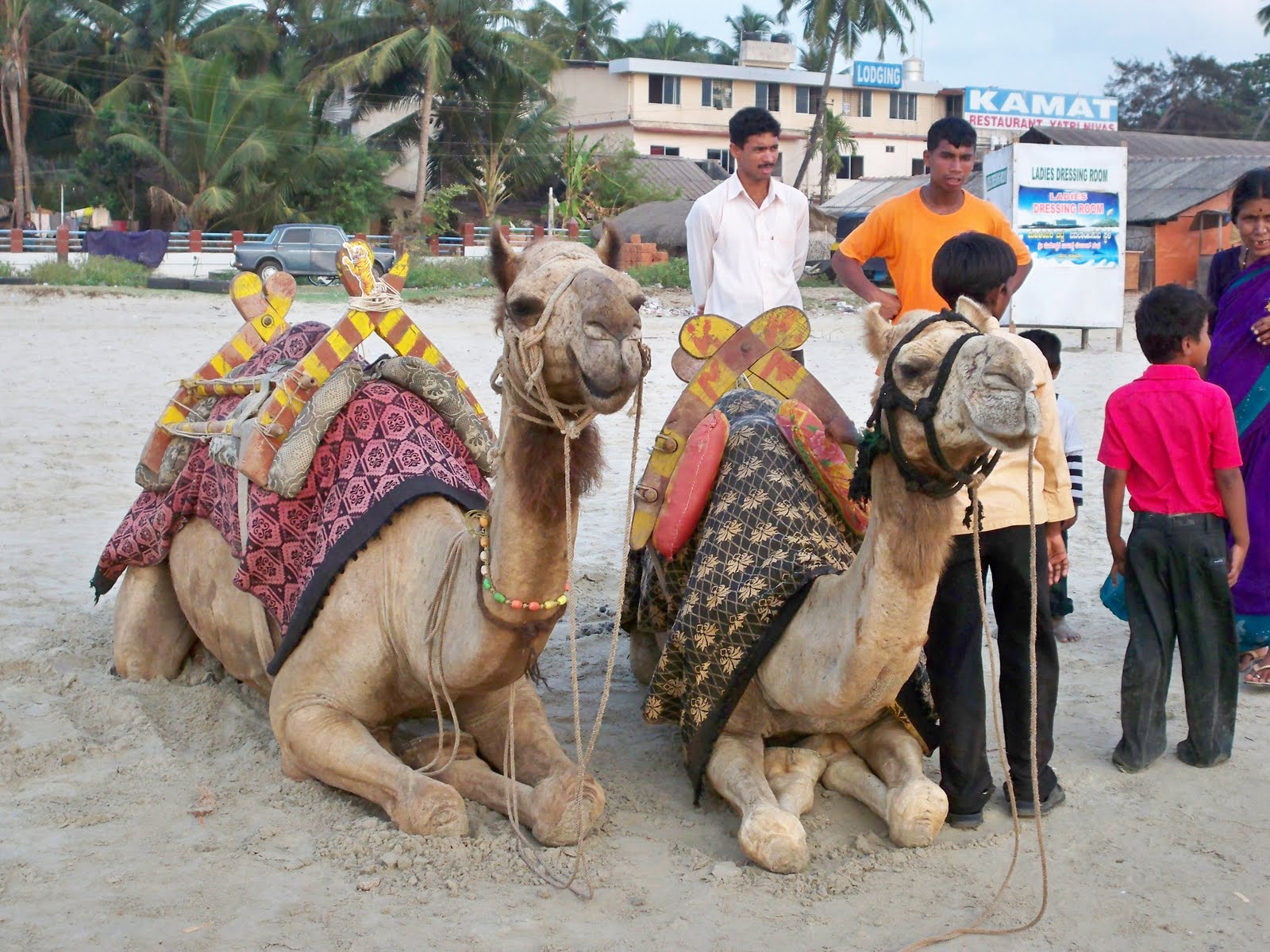
Murudeshwar Beach, Karnataka

Murudeshwar beach, a favorite tourist spot in South India, is situated in between Bhatkal and Honnavar.


Things to do and see in Murudeshwar
The cool breeze on Murudeshawr beach can be best enjoyed either early in the morning or late afternoon. Peace-lovers can spend their evening, watching kingfishers and seagulls diving for crabs and other creatures between the rocks. The beach also attracts visitors for the adventure of parasailing. Enthusiast can easily finds locals on the sea-beach, offering the colorful parachutes. For boat-rides, visitors can seek help of the local fishermen, who will take riders around the Kandukagiri hillock to the other section of the beach.


Bounded by the shimmering sea and rolling hills, this place is a favourite tourist spot. It is known for the gorgeous temple perched on a hillock by the shore. The temple which embodies a Linga is believed to have erupted when Ravana flung the cloth covering the Atmalinga at Gokarna while lifting it. As one ascends the hillock, there is a shrine of Jattiga seated on a horse. There is a huge fort behind the temple, said to have been renovated by Tipu. The place can be visited all the year round. Murdeshwara is 386 kms from Bangalore/ 151 kms from Karwar. It can be approached by road and rail from Bangalore and by road from Karwar.


Murudeshwar Beach


ಮೋರ್: Murudeshwar ಬೀಚ್

ಮುರುಡೆಶ್ವರ್ Temple

Murudeshwara temple, dedicated to Lord Shiva, lies in the holy beach town in the Bhatkal Taluk of Uttara Kannada district in the state of Karnataka, India. Situated between the Honnavar and Bhatkal town(about 12kms) The statue of Shiva here is the world's tallest and it lies on the coast of the Arabian Sea.
The Statue of Shiva with Ravana handing Atma Linga to Bramhin boy(Lord Ganesha)


he name "Murudeshwara" means Shiva or Eeshwara. The significance of this holy town dates to the time of Ramayana. By penance dedicated to the AtmaLinga, the divine Lingam of Shiva procures invincibility and immortality to the Hindu Gods. Ravana, the Lanka King worshipped Shiva with devotion to attain immortality by obtaining the AtmaLinga. Lord Shiva appeared before Ravana and asked him what he wanted. By this time Lord Vishnu to change Ravana's mind on behest of Narada. As a result of this plot, Ravana asks for Goddess Parvathi, and Lord Shiva offers him.
More

More:http://www.karnataka.com/tourism/murdeshwar

Wednesday, March 31, 2010

ಕನ್ನದಲ್ಲಿ ನನ್ನ ಮೊದಲ Prayantna

ಹಿ ಬಸವ ಕುಮಾರ್ ಬಂದಿದ್ದರು . ಆಫೀಸ್ ಅಲ್ಲಿ ಗಡಿ ಬಿನಿ ಮಾಡುತ ಇದ್ದರು :)-

ಇದು ಮಾರ್ಚ್ ಕೊನೆಯ ಕಾರ್ಬಾರು.

Thursday, November 26, 2009

26/11: Mumbai remembers, nation remembers

Today (November 26) marks the end of a year to the horrific 26/11 attacks that shook the nation. A year ago over 170 people were mercilessly gunned down by terrorists in Mumbai. Today your channel looks back, echoing the public sentiment that we must not forget 26/11, lest we should have to say again that we take pride in being able to get back to the business of living – that by forgetting the day when terrorists wounded us most, we are ‘resilient’ and ‘strong’. TIMES NOW looks back also because those who have held office and squatted in abject incompetence have to be reminded not to make the mistakes of the past.

more:
http://www.timesnow.tv/2611-Mumbai-remembers-nation-remembers/articleshow/4332972.cms

Gateway of India, Mumbai

The Gateway of India (Marathi: भारताचे प्रवेशद्वार) is a monument in Mumbai (formerly Bombay), India. Located on the waterfront in Apollo Bunder area in South Mumbai, the Gateway is a basalt arch 26 meters (85 ft) high.

History:
The Gateway of India was built to commemorate the visit of King George V and Queen Mary to Bombay, prior to the Delhi Durbar, in December 1911.

More:
References:http://en.wikipedia.org/wiki/Gateway_of_India

A view of Taj Mahal Palace, Mumbai


The Taj Mahal Palace & Tower is a prestigious luxury hotel located in the Colaba region of Mumbai, Maharashtra, India, next to the Gateway of India.

The Taj Mahal Palace hotel resort was commissioned in Indo-Saracenic style by Tata and first opened its doors to guests on 16 December 1903.
It is widely believed that Tata decided to build the luxurious hotel after he was refused entry to one of the city's grand hotels of the time, Parke's Apollo Hotel, as it was restricted to 'whites only'. However, this story has been challenged by some commentators that suggest that Jamsedji Tata was unlikely to have been concerned with 'revenge' against his British adversaries. Instead they suggest that the Taj was built at the urging of editor of the Times of India who felt a hotel "worthy of Bombay" was needed
2008 terrorist attack
On 26 November 2008, in a series of terrorist attacks in Mumbai, the hotel (as well as the Oberoi) was attacked, during which material damage occurred including the destruction of the roof of the hotel in the hours afterwards.[4] Hostages were taken during the attacks. At least 167 people were killed[5] in the attacks and 293 wounded[5] (the numbers include casualties at CST railway station, The Oberoi Hotel, Nariman House and the Cama Hospital), including many foreigners. The casualties were mostly Indian citizens, although westerners carrying foreign passports were singled out. Indian commandos killed the Pakistani gunmen barricaded in the hotel to end the three-day battle.

More:
http://en.wikipedia.org/wiki/Taj_Mahal_Palace_%26_Tower


Friday, October 09, 2009

The Chennakesava Temple (ಶ್ರೀ ಚೆನ್ನಕೇಶವ ದೇವಸ್ಥಾನ) Belur.

The temple was commissioned by Hoysala King Vishnuvardhana in 1117 CE. Scholars are divided about the reason why King Vishnuvardhana commissioned the construction of the temple. The military successes of Vishnuvardhana is considered a probable reason.[1] Some scholars believe Vishnuvardhana commissioned the temple to surpass his overlords, the Western Chalukya Empire (who ruled from Basavakalyan), after his military victories against them.[2]According to another theory, Vishnuvardhana was celebrating his victory against the Cholas of Tamil country in the battle of Talakad, which resulted in the annexation of Gangavadi (modern southern Karnataka) by the Hoysalas.[3] Another explanation points to Vishnuvardhana's conversion from Jainism toVaishnavism, considering this is predominantly a Vaishnava temple.[4] The Hoysalas employed many noted architects and artisans who developed a new architectural tradition, which some historians call Karnata Dravida tradition.[5] A total of 118 inscriptions have been recovered from the temple complex, covering the period between c. 1117 CE to 18th century, which give details of the artists employed, grants made to the temple and renovations.


The Chennakesava Temple (Kannada: ಶ್ರೀ ಚೆನ್ನಕೇಶವ ದೇವಸ್ಥಾನ) originally called Vijayanarayana Temple(Kannada: ವಿಜಯನಾರಾಯಣ ದೇವಸ್ಥಾನ) was built on the banks of the Yagachi River in Belur, an early capital of the Hoysala Empire. Belur is 40 km from Hassan city and 220 km from Bangalore, in Hassan district ofKarnataka state, India. Chennakesava literally means "handsome Kesava" and is a form of Hindu God Vishnu. Belur is well-known for its marvelous temples, built during the rule of Hoysala dynasty, making it and nearby Halebidu, a favored tourist destination in Karnataka.

Baba Budangiri / Dattagiri

Dattagiri Hills or Baba Budan Giri Range is a range of mountains in the Western Ghats of Karnataka, India. The range, originally known as Chandra Drona Parvatha, takes its current name from the Dattapeeta Cave and 17th century Sufi saint Baba Budan. The Dattagiri or Baba Budan Giri Range includes the highest peaks of Karnataka. Unique mountain flowers called Kurinji blooms in these hill ranges once in every 12 years and the last time this spectacle happened here was in 2006.

Peaks in the Dattagiri Hills/Baba Budan Giri Range include:


Dattagiri / Baba Budangiri (or Bababudangiri or Baba Budan Giri) is a mountain in the Dattagiri Hill Range / Baba Budan Giri Range of theWestern Ghats of India. Located in the Chikkamagaluru District of Karnataka, Dattagiri/ Baba Budangiri is known for its shrine which is a place of pilgrimage for both Hindus and Muslims.

Peaks in the Dattagiri / Baba Budan Giri Range are the Mullayanagiri and Dattagiri/Baba Budangiri (height 1895 m).

Mullayanagiri also spelt Mullayangiri or Mullainagiri is the highest peak in the Baba Budan Giri Range. With a height of 1930 m (6317 ft.), it is the highest peak between the Himalayas and the Nilgiris.