Showing posts with label Indian. Show all posts

Thursday, October 02, 2014

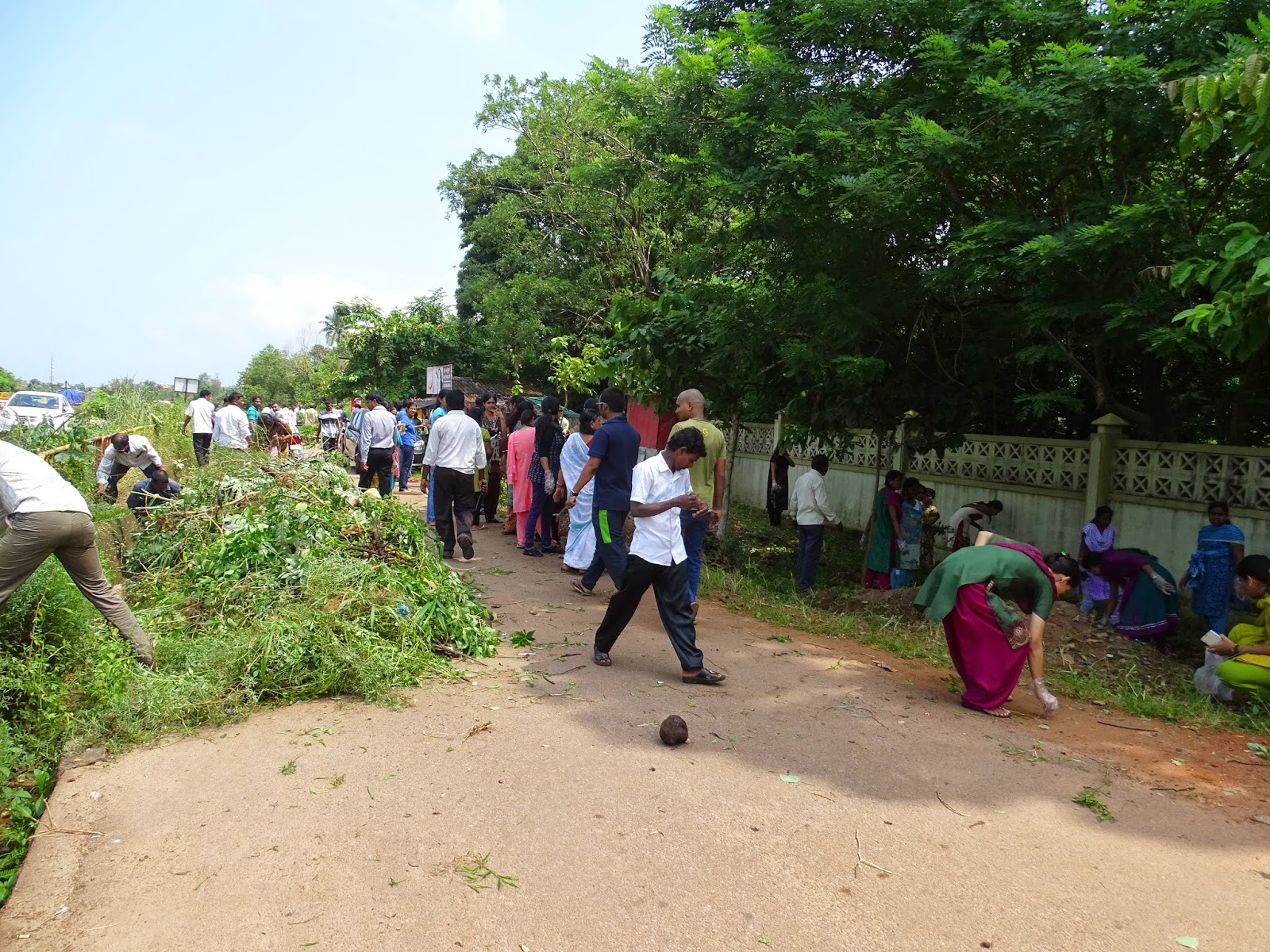
NITK, Surathkal : swachh bharat mission

Prime Minister Narendra Modi will launch the Swatchh Bharat mission on Thursday aimed at creating a 'Clean India' in the next five years.
Modi would symbolically wield a broom October 2, the birth anniversary of Mahatma Gandhi, and reach out to all Indians to make cleanliness a mass movement.
Preparations were being made in government offices and also by the Bharatiya Janata Party leaders in Delhi for large participation in "cleanliness oath" to be taken Thursday.


Read more at: http://indiatoday.intoday.in/story/narendra-modi-swachh-bharat-gandhi-jayanti/1393778.html
 After effects of Swactchh bharath  mission @ NITK Suarthkal


Thursday, April 19, 2012

India Test fires Agni V ICBM missile

The maiden test of Agni V missile was successfully test fired on Thursday 8.05 am from wheeler island odisha. Which was developed by the Defense Research and Development Organisation. (DRDO)Agni-5, with a range of over 5,000 km, is a three-stage, all solid fuel powered, 17-metre tall missile with capability to carry various forms of payload. It can be launched from land-based mobile platform and has the capability of hitting multiple targets.
 The successful test launch of the missile is a major leap forward for India in the area of military technology and military deterrent capability, making it the fifth country in the world to possess such a technology. A successful flight would have placed India in the elite league of nation like the US, France, Russia and China having ICBMs.
After its test launch, DRDO plans to conduct more tests of the missile over the next one year after studying and analysing the parameters achieved in each subsequent trial and the weapon system would join service in 2014.
This photo was taken from http://www.defence.pk/forums/indian-defence/173293-agni-v-missile-tested-wednesday-8.html

Wednesday, October 06, 2010

‘Art of War’ and ‘Principles of War’

China continues to be driven by Sun Tzu’s philosophy. Sun Tzu had said:-
  • For to win one hundred victories in one hundred battles is not the acme of skill. To subdue the enemy without fighting is the supreme excellence.
  • Those skilled in war subdue the enemy’s army without battle.
  • The height of strategic wisdom is to avoid all conflicts and entanglements from which there are no realistic exits.
  • Ideal winning is winning without bloodshed. By playing with psychological weaknesses of the opponent, by manoeuvering enemy to precarious position, by inducing feeling of frustration and confusion, a strategist can get the other side to break down mentally before surrendering physically or psychologically.
  • Wisdom lies in defeating the strategy rather than the military.
China is doing nothing new but following the ‘Art of War’ and ‘Principles of War’ laid down by Sun Tzu. It is waging war on India without field armies. The intent is clear — to subdue India without fighting a war.

Also Read: Unmasking China

                                                                By Col Narender Kumar 
                                                                Issue: Vol 25.2 Apr-Jun 2010

Friday, August 18, 2006

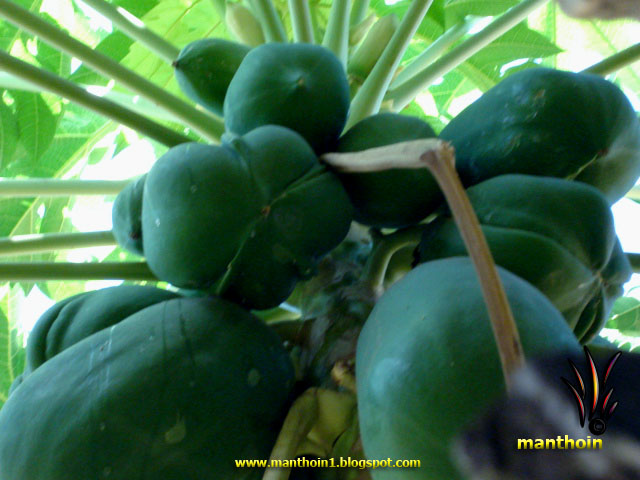
Indian Carica papaya


Click photo to Enlarge.

The papaya (from Carib via Spanish), papaw, or pawpaw is the fruit of the plant Carica papaya, the sole species in the genus Carica of the plant family Caricaceae. It is native to the tropics of the Americas, and was first cultivated in Mexico[1] several centuries before the emergence of the Mesoamerican classical civilizations.
The papaya is a large tree-like plant, with a single stem growing from 5 to 10 metres (16 to 33 ft) tall, with spirally arranged leaves confined to the top of the trunk. The lower trunk is conspicuously scarred where leaves and fruit were borne. The leaves are large, 50–70 centimetres (20–28 in) diameter, deeply palmately lobed with 7 lobes. The tree is usually unbranched, unless lopped. The flowers are similar in shape to the flowers of the Plumeria, but are much smaller and wax-like. They appear on the axils of the leaves, maturing into the large 15–45 centimetres (5.9–18 in) long, 10–30 centimetres (3.9–12 in) diameter fruit. The fruit is ripe when it feels soft (as soft as a ripe avocado or a bit softer) and its skin has attained an amber to orange hue.

 More:http://en.wikipedia.org/wiki/Carica_papaya
Kingdom: Plantae
(unranked): Angiosperms
(unranked): Eudicots
(unranked): Rosids
Order: Brassicales
Family: Caricaceae
Genus: Carica
Species: C. papaya